


Hi there,
There was a CEO I coached once who couldn’t stop talking about recognition.
He’d say things like, “I just want my team to know how much I’m doing behind the scenes.”
Or “It feels like no one appreciates how much I’ve built here.”
A few weeks later, I went to visit his team during an offsite to see what was happening. What I noticed was that his team actually deeply respected him. Yet, every time praise came up, he dodged it.
When employees brought up how great his leadership was, he’d change the subject. When his board thanked him, he would brush it off. And every time he deflected a compliment, he was teaching people to stop giving them. Nobody wants to give compliments to someone who’s not acknowledge them or dismissing them as lies.
In other words: He had created a world where he was constantly unseen by his own design.
Eventually, in a session, I asked him to run an experiment with me. I said, “When I tell you that you’ve built something extraordinary, just take a deep breath and say thank you.”
He laughed awkwardly, and then tried it a few times.
On the third or fourth time, he finally allowed the compliment in. He teared up instantly. He’d been starving himself of the very thing he craved.
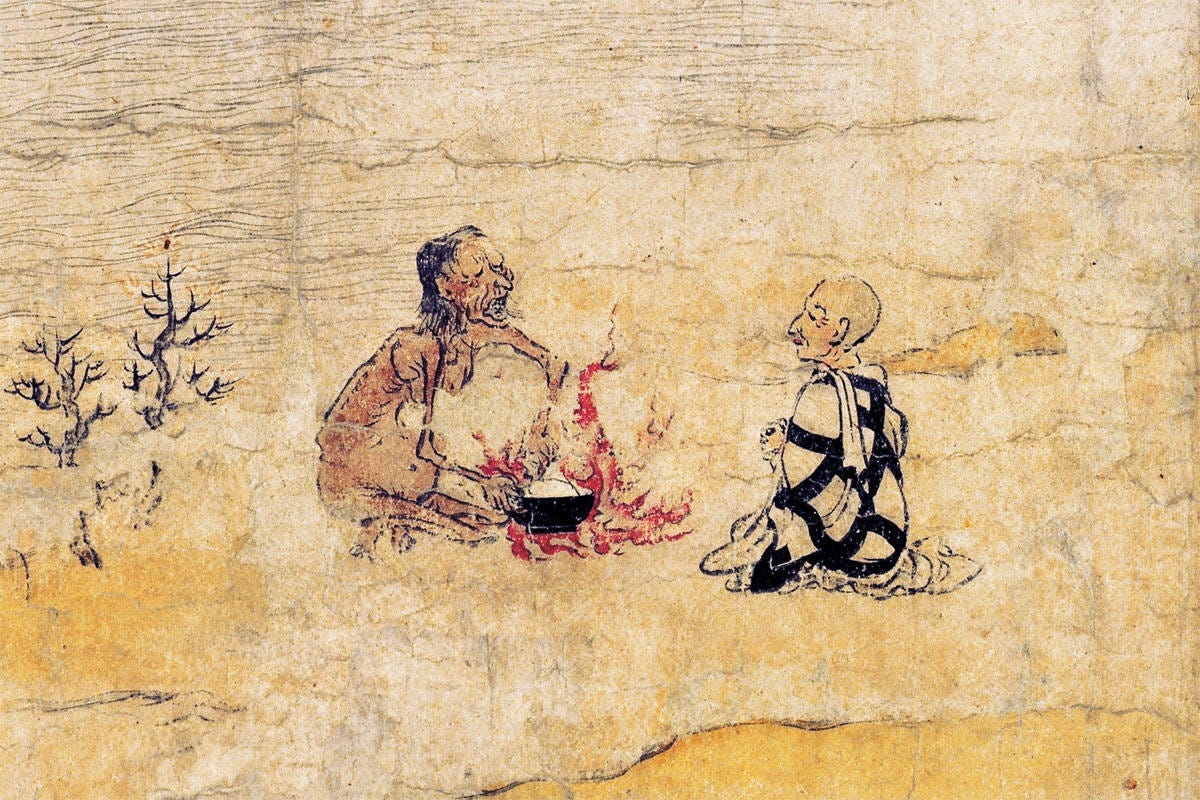
The hungry ghost leader
The hungry ghost is an image that comes from Buddhist and Taoist traditions.
It describes a spirit doomed to wander endlessly with a huge empty belly and a tiny mouth: Forever hungry, but never able to be satisfied.
In leadership, the hungry ghost shows up as the need for status, validation, or approval that can never quite be fed.
You chase the next promotion, the bigger title, the board seat. You get it, and the satisfaction lasts maybe a day. Then the emptiness returns, so you chase the next thing.
I see this often: You crave praise and status, yet don’t know how to let it in when it comes.
A great way to work with the hungry ghost is to learn how to receive compliments and praise, as well as welcome all the complicated emotions that may arise with it: Discomfort, unworthiness, or the fear that you’ll be seen as arrogant.
This alone can be one of the most powerful transformational practices for a leader. I’ve seen it change people completely.
Experiment
The next time someone compliments your work, don’t deflect, minimize, or redirect the credit to your team.
Take a breath and say “Thank you.”
Let it land in your body for three full seconds before you say anything else. If any feelings of discomfort come up, do an Emotional Inquiry:
Big Love,
Joe
This newsletter is brought to you by The Council.